



By Amb. Anderson Osiebe.
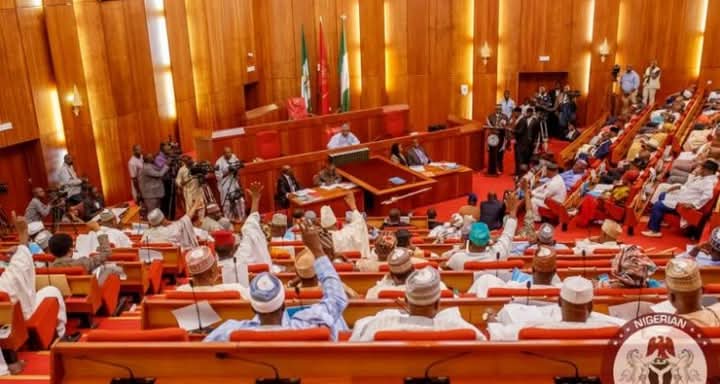
As Nigeria gradually approaches the 2027 general elections, the conversation around credible elections has once again taken center stage.
Elections remain the most powerful instrument through which citizens express their democratic will, determine leadership, and shape the future of their nation.
However, Nigeria’s electoral history has been punctuated by concerns ranging from voter apathy and electoral violence to vote buying, manipulation of results, and declining trust in institutions.
If the 2027 elections must stand out as credible, transparent, and widely accepted, responsibility must not rest on one institution alone. It must be a collective commitment involving the electoral body, political actors, civil society, the media, and most importantly, the Nigerian electorate.
The Role of INEC.
The Independent National Electoral Commission (INEC) remains the backbone of Nigeria’s electoral system. Its preparedness, independence, and transparency will determine public confidence in the electoral process.
INEC must begin early preparations by strengthening logistics, improving voter register integrity, and ensuring that technologies introduced to improve transparency, such as the Bimodal Voter Accreditation System (BVAS) and electronic transmission of results function effectively and without interference.
Equally important is the need for the commission to remain firmly independent. Electoral credibility suffers when citizens perceive the commission as being influenced by political authorities. INEC must therefore demonstrate transparency in its operations, communicate clearly with the public, and hold electoral officers accountable where misconduct occurs.
The Responsibility of the Electorate.
Nigerian voters themselves carry enormous responsibility for the credibility of elections. One of the biggest threats to Nigeria’s democracy is voter apathy. Many citizens complain about poor governance yet fail to participate actively in the electoral process.
For elections to be credible, Nigerians must first register to vote, collect their Permanent Voter Cards (PVCs), and turn out massively on election day. Citizens must also reject vote buying, which has increasingly become a dangerous trend in Nigerian politics.
When voters exchange their votes for small amounts of money or material benefits, they inadvertently empower leaders who lack competence or accountability.
Protecting the sanctity of the ballot must therefore become a civic duty.
Political Parties and Internal Democracy.
Political parties are the gatekeepers of Nigeria’s democracy. Unfortunately, internal democracy within many parties remains weak, with candidate imposition, opaque primaries, and disregard for party members’ voices.
To secure credible elections in 2027, political parties must reform their internal processes. Transparent primaries, merit-based candidate selection, and respect for party rules will not only strengthen democracy but also produce candidates with legitimacy and credibility.
Parties must also commit to issue-based campaigns rather than ethnic or religious rhetoric that often fuels division and violence.
Candidates must uphold Democratic Values.
Political candidates themselves must see elections as a contest of ideas rather than a battle to be won at all costs. The desperation to win power at any cost often leads to electoral violence, intimidation of voters, and manipulation of the system.
Candidates should focus on presenting clear policy alternatives, engaging voters respectfully, and accepting the outcome of credible elections. When disputes arise, they must pursue legal channels rather than inciting unrest.
Leadership in a democracy must come with a deep respect for the will of the people.
The Role of Civil Society and Election Observers.
Civil society organizations and election observers play a critical role in safeguarding electoral credibility. Through voter education, independent monitoring, and public reporting, these groups help ensure transparency and accountability.
Domestic observer groups must be adequately trained and deployed nationwide, while international observers can provide additional credibility to the process. Their reports often shape global perceptions of Nigeria’s democratic progress.
However, beyond observation, civil society must intensify voter education efforts to ensure citizens understand their rights and responsibilities during elections.
The Media as a Democratic Watchdog.
The Nigerian media must continue to act as a watchdog of the electoral process. Accurate reporting, investigative journalism, and fact-checking will help expose irregularities and combat misinformation.
At the same time, the media must avoid becoming platforms for propaganda or misinformation that could inflame tensions during elections.
Responsible journalism will be crucial in ensuring that Nigerians receive credible information about candidates, policies, and electoral procedures.
Security Agencies and Electoral Integrity.
Security agencies also have a vital role to play in ensuring peaceful elections. Their duty is to protect voters, election officials, and electoral materials without intimidation or partisanship.
Professional conduct by security personnel will help create a safe environment where citizens can exercise their democratic rights without fear.
A Collective Responsibility.
Credible elections cannot be achieved through institutional reforms alone. They require a national culture that respects democratic principles and the sanctity of the ballot.
Nigeria’s democracy is still evolving, and the 2027 elections present another opportunity to strengthen public trust in the electoral system.
Every stakeholder, from electoral officials to ordinary citizens must play their part in safeguarding the integrity of the process.
If Nigerians commit collectively to transparency, accountability, and participation, the 2027 elections can mark a significant step forward for the country’s democratic journey.
Amb. Anderson Osiebe, Executive Director, HallowMace Foundation, Public Policy Expert and an Administrator Writes from Abuja – Nigeria.